
The “Who” and the “How” – Capacity & Free Consent
So far, we have an offer, an acceptance, and a price. But wait—did you just sell your house to a 10-year-old? Or did someone hold a gun to your head while you signed?
For a contract to be valid, the players must be Competent (Capacity) and the game must be Fair (Free Consent). If these are missing, the contract is either dead (void) or limping (voidable).
1. Capacity to Contract: The “No Kids Allowed” Rule (Section 11)
The law assumes certain people are too vulnerable to protect their own interests. Section 11 says you must be:
- Of the Age of Majority (18+).
- Of Sound Mind.
- Not Disqualified by Law (e.g., insolvents).
The Minor’s Agreement: The “Mohori Bibee” Shield This is the most famous case in Indian Contract Law. You cannot sue a minor.
The Landmark Case: Mohori Bibee v. Dharmodas Ghose (1903)
The Story: A minor mortgaged his house to a moneylender to get a loan. When the moneylender tried to enforce the mortgage, the minor argued, “I’m a kid, the deal is void.”
The Verdict: The Privy Council laid down the iron law: A minor’s agreement is Void Ab Initio (Void from the very beginning). It’s not just invalid; legally, it never happened.
Key Takeaway for CLAT: The rule of Estoppel (stopping someone from going back on their word) does not apply to minors. Even if the kid lied about his age, you still can’t sue him for the contract. You might get your property back (Restitution), but you can’t enforce the deal.
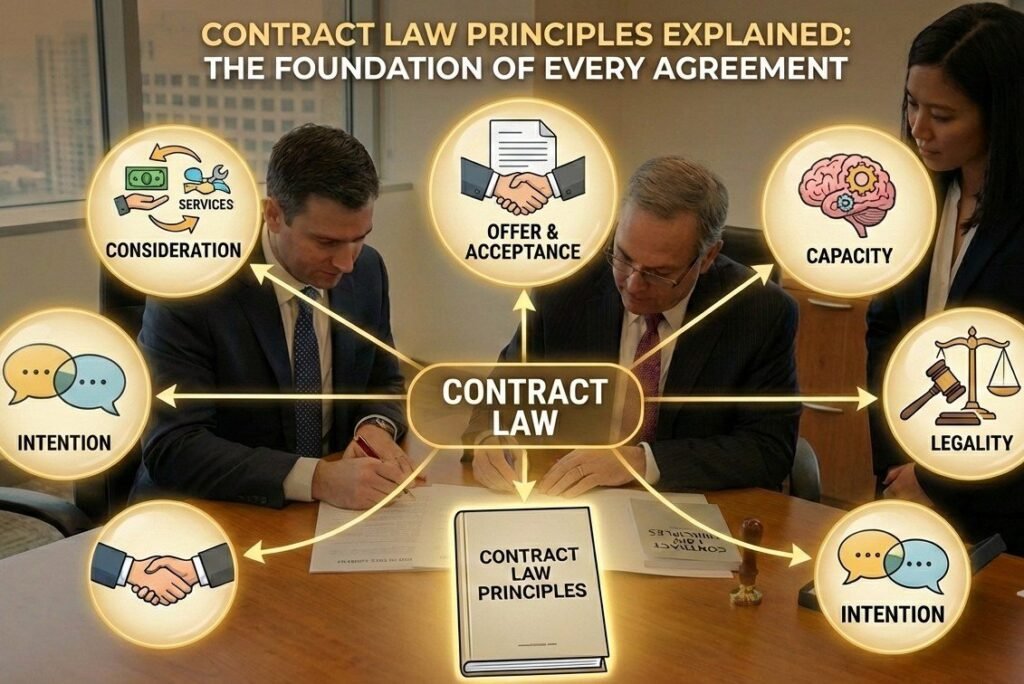
2. Free Consent: The “Gun to the Head” Test (Section 14)
“Consent” means agreeing to the same thing in the same sense (Consensus ad idem). “Free Consent” means you weren’t forced or tricked. If consent isn’t free, the contract is usually Voidable—meaning the victim can choose to keep it or kill it.
Here are the “Vitiating Factors” (The Deal Breakers):
- A. Coercion (Section 15) – The Physical Threat”Sign this, or I shoot.”
Coercion is committing (or threatening) any act forbidden by the IPC, or unlawfully detaining property.
Key Case: Chikkam Ammiraju v. Chikkam Seshama (1917)
A man threatened to commit suicide unless his wife and son signed a property release. The court held that a threat of suicide is coercion, even though suicide itself isn’t punishable (because the person is dead!).
- B. Undue Influence (Section 16) – The Mental Pressure
This is subtle. It happens when one person is in a position to dominate the will of another and uses it to get an unfair advantage.
Think: Doctor-Patient, Guru-Disciple, Parent-Child.
Key Case: Manu Singh v. Umadat Pande (1890)A spiritual guru induced his devotee to gift him all his property to secure “benefits in the next world.” The court struck it down. The guru had too much influence over the devotee’s mind.
- C. Fraud (Section 17) vs. Misrepresentation (Section 18)The difference is Intent.
Fraud: I know the car engine is broken, but I paint over it and tell you it’s “brand new.” (Intent to Deceive).
Misrepresentation: I honestly believe the engine is fine (because my mechanic told me so), and I tell you it’s fine. Later, it breaks. I didn’t lie on purpose.
Legal Effect: In both cases, the contract is voidable. But in Fraud, you can also sue for Damages (money).
- D. Mistake (Sections 20-22) – The “Oops” Factor
Sometimes, both parties are just wrong.
- Bilateral Mistake (Void): Both parties make a mistake about a matter of fact essential to the agreement.Example: I agree to sell you my horse. Unknown to both of us, the horse died yesterday. The contract is Void.
- Unilateral Mistake (Valid): Only one person is wrong.Example: You buy a painting thinking it’s an original Picasso. I never said it was. It’s a fake. Bad luck for you (Caveat Emptor). The contract stands.
Why This Matters
For a lawyer, these sections are the escape routes. When a client wants to get out of a bad deal, you check: Was he 17? Was he drunk? Was he lied to? If the answer is yes, you have a case.